Fishing Knots: How to Tie the 6 Knots Every Angler Needs
By Jake Harlow · Updated September 2026
Quick answer: to tie a fishing line to a hook or lure, learn the Palomar knot (easiest and strongest for most lines, including braid) and the improved clinch knot (the classic for monofilament). Add the uni knot, which does almost everything, the double uni for joining two lines, and the arbor knot for tying line to a reel, and you can handle nearly any fishing situation. Step-by-step instructions for each are below.
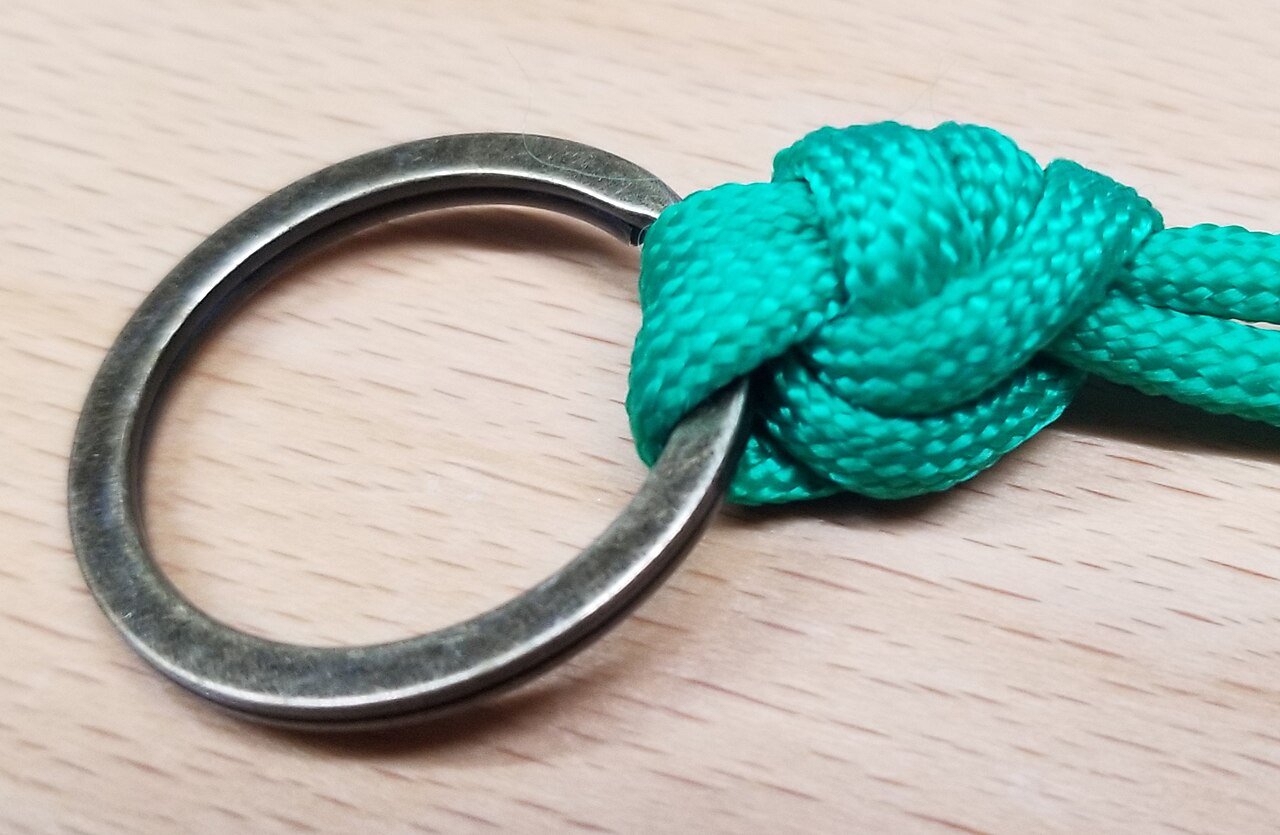
The essential fishing knots at a glance
| Knot | Use it to | Best with | Difficulty |
|---|---|---|---|
| Palomar | Tie line to a hook, lure or swivel | Braid, mono, fluorocarbon | Easy |
| Improved clinch | Tie line to a hook, lure or swivel | Mono and fluorocarbon (not braid) | Easy |
| Uni (Grinner) | Tie line to terminal tackle, or to a reel | All lines | Easy |
| Double uni | Join two lines, e.g. braid to a leader | All lines, including different diameters | Medium |
| Surgeon’s knot | Join two lines of similar diameter quickly | Mono and fluorocarbon | Easy |
| Arbor knot | Attach line to a reel spool | All lines (use tape or backing under braid) | Easy |
| Snell knot | Tie a hook so the pull is in line with the shank | Mono and fluorocarbon | Medium |
| Loop knots (perfection, non-slip) | Give a lure free movement or make a connection loop | Mono and fluorocarbon | Medium |
How to tie a fishing knot on a hook: three rules
- Leave enough tag end. Pull 6 to 8 inches of line through the eye so you have room to work.
- Moisten the knot with water or saliva before tightening. Friction heat weakens line, especially fluorocarbon.
- Tighten slowly and firmly, pulling both the standing line and the tag end, then trim the tag about 1/8 inch from the knot.
1. Palomar knot
The Palomar is the knot to learn first: it has only a few steps, it is very strong, and it works with braid, which lets many other knots slip.
- Double about 6 inches of line to form a loop, and pass the loop through the hook eye.
- Tie a loose overhand knot with the doubled line, leaving the hook hanging in the middle.
- Pass the loop over the entire hook or lure.
- Moisten, then pull the standing line and tag end to draw the knot tight against the eye. Trim the tag.
Watch out: the loop must go over the whole lure, which is awkward with large crankbaits with several trebles. More detail: how to tie a Palomar knot.
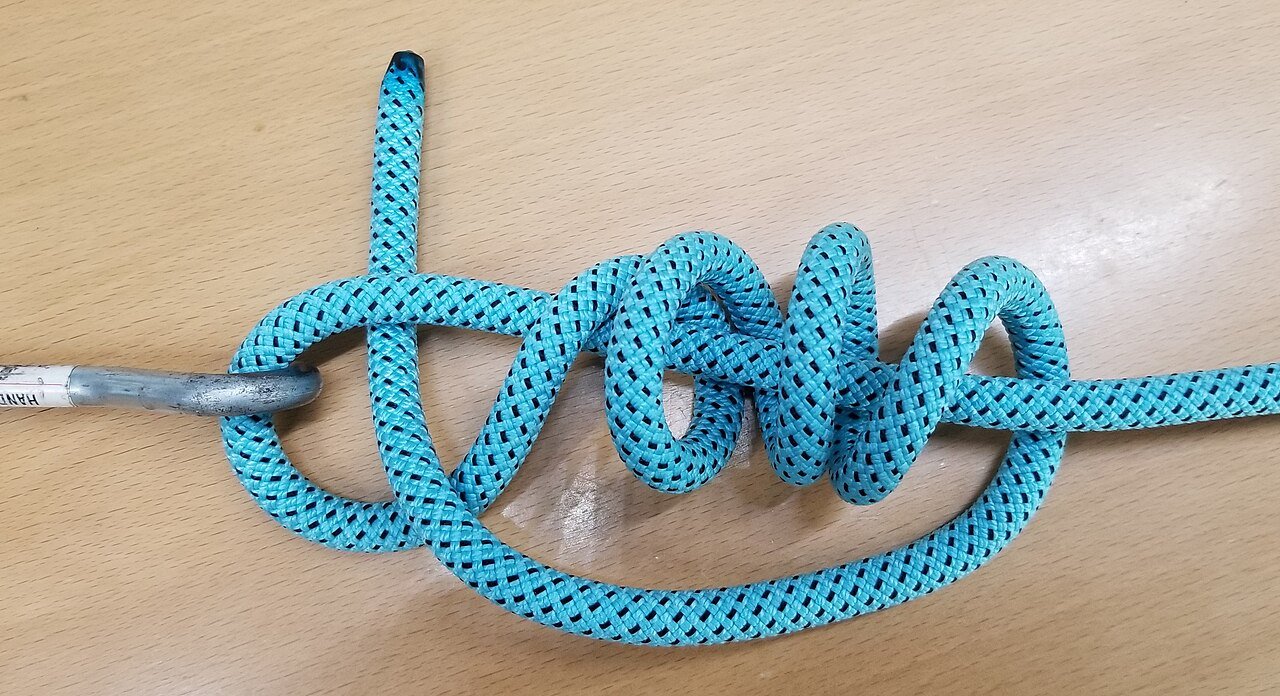
2. Improved clinch knot
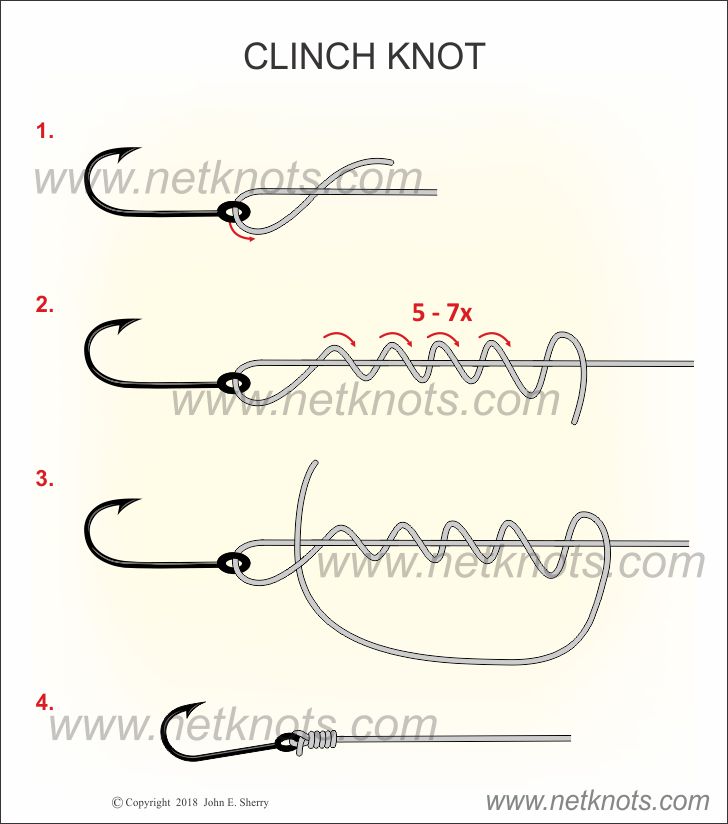
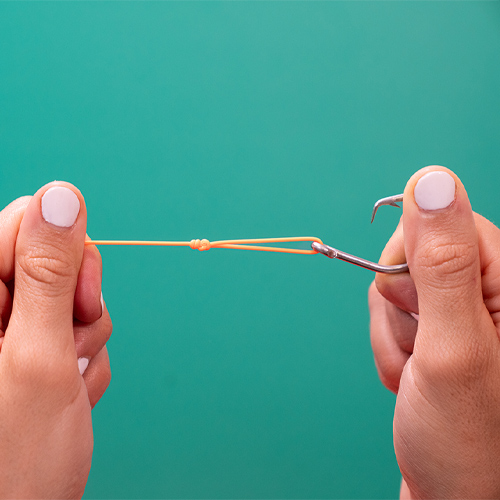
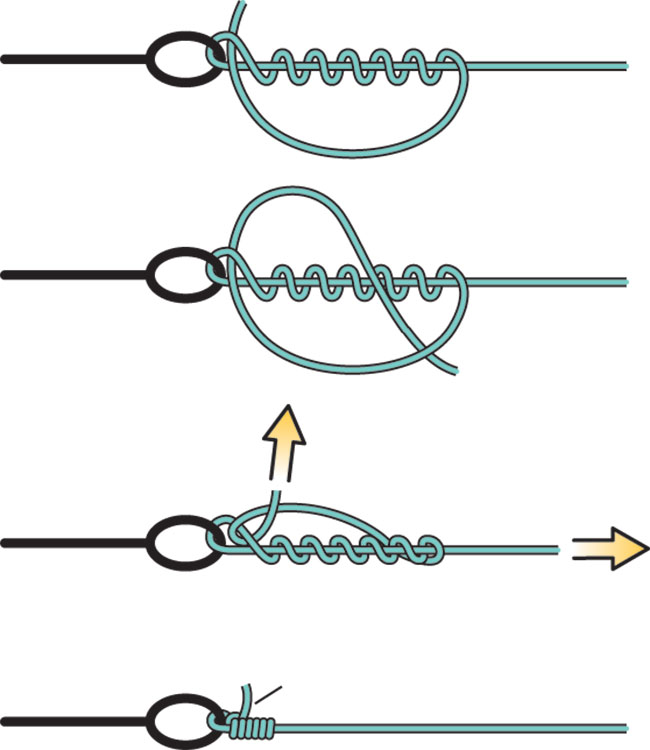
The improved clinch is the classic mono knot and is quick to tie on small hooks and lures.
- Pass the line through the hook eye and pull through 6 inches or so.
- Wrap the tag end around the standing line 5 to 7 times (fewer wraps for heavy line).
- Pass the tag end back through the small loop just above the eye.
- Then pass it through the large loop you have just formed (“improved” step).
- Moisten and pull the standing line to tighten, keeping the wraps from overlapping. Trim.
Watch out: do not use it with braid, which slips; use the Palomar or a braid-specific knot instead. See how to tie a cinch knot.
3. Uni knot
The uni knot (also called the Grinner) is the most versatile fishing knot: the same knot ties line to a hook, a swivel or a reel spool, and two uni knots join lines together.
- Pass the line through the eye and double it back so the tag end lies alongside the standing line.
- Bring the tag end back toward the eye to form a loop over the two parallel lines.
- Wrap the tag end around both lines and through the loop 5 to 7 times (more with braid).
- Moisten and pull the tag end to snug the wraps, then pull the standing line to slide the knot down to the eye. Trim.
4. Double uni knot (joining two lines)
Use the double uni to tie braid to a fluorocarbon or mono leader, or to join two lines of different diameters.
- Overlap the ends of the two lines by about 8 inches.
- With one tag end, tie a uni knot around the other line: form a loop, wrap around both lines inside the loop and snug it down.
- Repeat with the other tag end around the first line.
- Moisten, then pull the two standing lines apart so the knots slide together. Trim both tags.
Tip: give the slippery braid about twice as many wraps as the leader. More line-to-line options: top line-joining knots and how to tie an Albright knot.
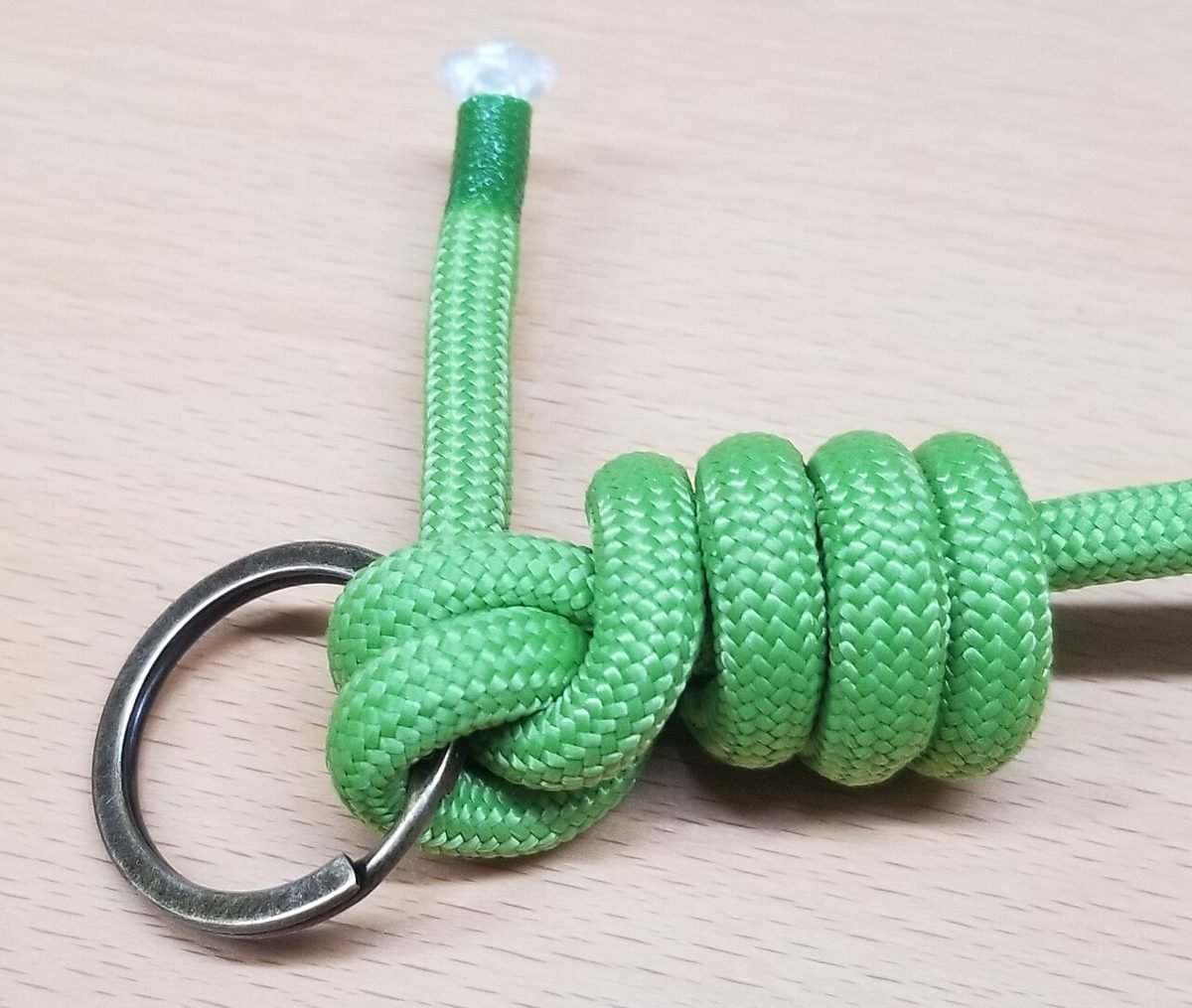
5. Surgeon’s knot (fast line-to-line)
- Overlap the end of your main line and leader by several inches.
- Treating the two lines as one, tie an overhand knot, passing the leader’s whole length through the loop.
- Pass the same ends through the loop a second time (a double surgeon’s knot).
- Moisten, pull all four ends to tighten, and trim the tags.
It is quick and strong for lines of similar diameter, but less neat than the double uni with braid.
6. Arbor knot (line to reel)
- Pass the line around the reel spool (open the bail first on a spinning reel).
- Tie an overhand knot with the tag end around the standing line.
- Tie a second overhand knot in the tag end itself, close to the first.
- Pull the standing line so the knot slides down and cinches onto the spool. Trim.
Braid can spin on a bare spool, so put down a few turns of mono backing or a strip of tape first. See how much line to put on a spinning reel.
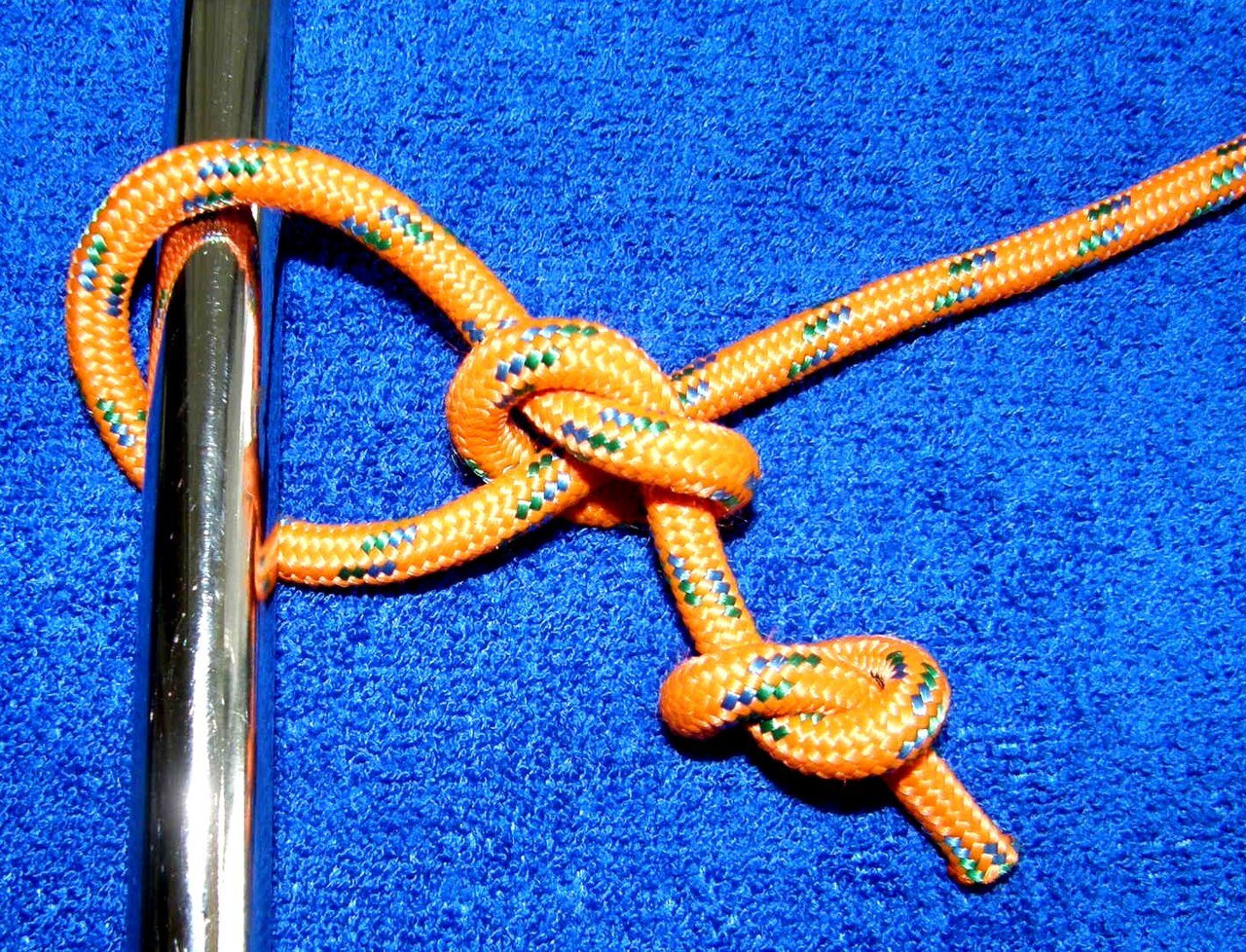
Other knots worth knowing
- Snell knot: wraps the line around the hook shank so the pull is straight in line with the hook, popular for bait fishing and circle hooks.
- Loop knots: a non-slip or perfection loop lets a lure swing freely; see fishing loop knots.
- Bobber stopper: sets the depth on a slip float; see how to tie a bobber stopper knot.
- Slip knot: see how to tie a slip knot for fishing.
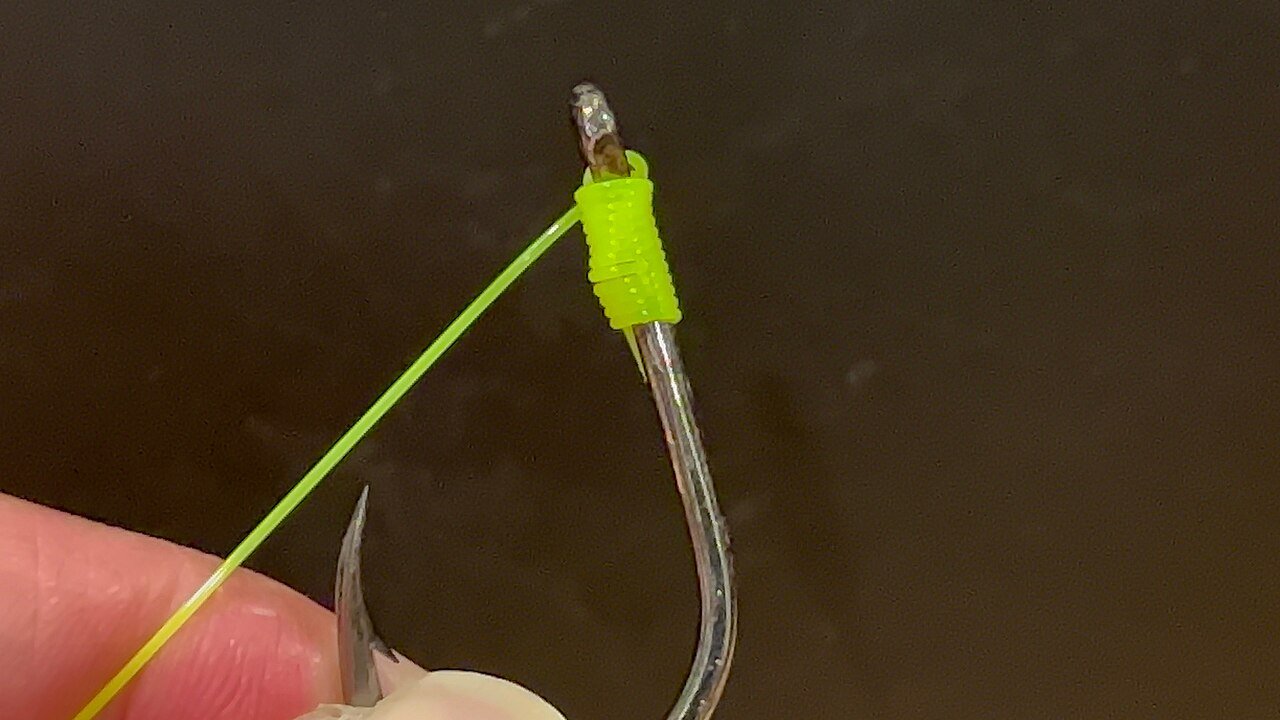
Which knot for which line?
| Line | Hook or lure | Joining to a leader |
|---|---|---|
| Monofilament | Improved clinch, Palomar, uni | Double uni, surgeon’s |
| Fluorocarbon | Palomar, uni (moisten well) | Double uni, surgeon’s |
| Braid | Palomar, uni with extra wraps | Double uni, Albright, FG |
More: top braided line knots, 11 ways to tie knots with braided line and the best saltwater knots. For lines themselves, see our guide to types of fishing line.
Why fishing knots fail
- Not moistening the knot, so friction burns the line as it tightens.
- Too few or too many wraps for the line type and diameter.
- Wraps crossing over each other instead of lying neatly.
- Trimming the tag too close, so the knot can slip.
- Using a mono knot, like the clinch, with braid.
- Re-using line that is nicked or worn; cut back a few feet and retie often.
Frequently asked questions
What is the easiest fishing knot?
The Palomar knot: double the line, pass it through the eye, tie an overhand knot and put the loop over the hook. It is also one of the strongest.
What is the strongest fishing knot?
For tying to a hook or lure, the Palomar is consistently one of the strongest when tied well. For joining braid to a leader, the FG and double uni are popular strong choices.
What is the best knot for braided line?
The Palomar for hooks and lures, and the double uni or FG knot for joining braid to a leader. Avoid the improved clinch with braid.
How do you tie fishing line to a reel?
With an arbor knot or a uni knot around the spool. Put a few turns of mono or tape under braid so it does not spin.
How many wraps should a clinch knot have?
Five to seven for most line; use fewer wraps with heavy line.
Start with easy fishing knots to learn if you are brand new, and practise at home with thick cord before tying on thin line.